
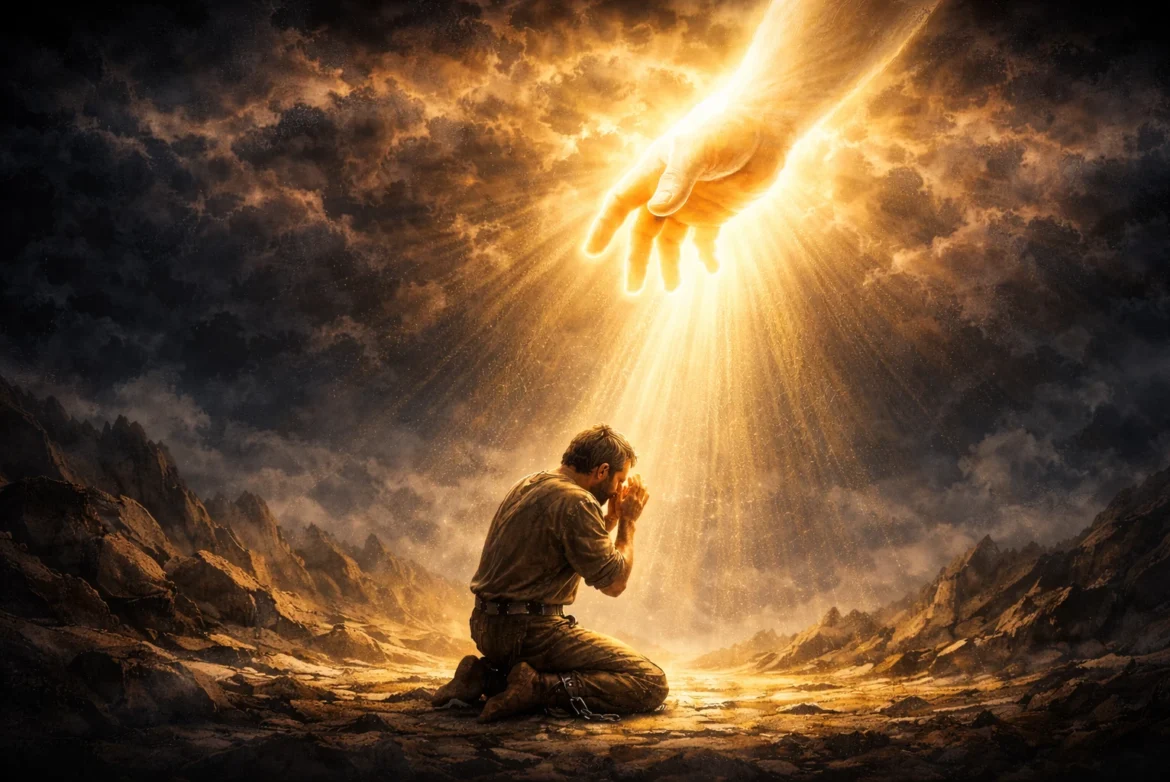
The Long Arm of Gods Grace | God’s Grace Can Still Reach a Repentant Heart
Even when sin reaches its darkest depths, the long arm of God’s grace can still reach a repentant heart—so hear God’s voice today, turn from sin, and cry out to Jesus while mercy is still calling.
Sermon Key Points
- The story of Manasseh reveals the depth of human rebellion and the greater depth of God’s grace.
- God sees every sin even when culture celebrates it.
- Sin always progresses—from evil, to much evil, to worse evil.
- A culture that celebrates wickedness loses the shame for sin.
- Abortion and the shedding of innocent blood remain an abomination in the sight of God.
- The public celebration of sexual immorality and gender rebellion reflects the same spirit of pride described in Scripture.
- God’s response to sin is first mercy—He speaks and calls people to repentance.
- Ignoring the voice of God eventually brings discipline.
- Brokenness and affliction often become the place where repentance begins.
- True repentance tears down the idols that once ruled the heart.
- The grace of God can restore even the worst sinner who humbles themselves before Him.
The Depth of Human Sin
The account of Manasseh in Second Chronicles 33 reveals one of the darkest spiritual declines recorded in Scripture. Though raised in a godly home by King Hezekiah, Manasseh rejected the truth he had been taught. The Bible plainly states that he “did evil in the sight of the Lord.” He rebuilt pagan altars, worshiped false gods, practiced witchcraft, and even sacrificed his own children in fire. His leadership corrupted the nation of Judah and caused the people to sin worse than the pagan nations God had previously judged.
This progression of evil shows a powerful biblical principle: sin never remains small. What begins as compromise eventually grows into open rebellion against God.
A Culture That Celebrates Sin
The story of Manasseh mirrors the moral climate seen in many societies today. Scripture warns that one of the signs of deep spiritual decline is when people lose their shame for sin and begin to openly celebrate what God calls evil. The public promotion of sexual immorality, the parading of sinful lifestyles, and the justification of abortion all reflect a culture that has rejected the authority of God’s Word.
The Bible teaches that the shedding of innocent blood is an abomination to God, and when societies normalize such acts they invite serious spiritual consequences. Just as in Manasseh’s day, many people today ignore God’s warnings and reject His truth.
God Still Speaks to Sinners
Despite Manasseh’s wickedness, Second Chronicles 33:10 reveals an incredible truth: God still spoke to him. Instead of immediately destroying him, the Lord sent warnings and calls to repentance. This shows the patience and mercy of God. Even when people are living in rebellion, God continues reaching out through His Word, through preachers, and through conviction of the Holy Spirit.
However, the tragedy of that verse is that Manasseh and his people refused to listen.
The Long Arm of God’s Grace
Eventually God allowed discipline to come into Manasseh’s life. Captured by the Assyrians and taken in chains to Babylon, the proud king finally reached a place of brokenness. In his affliction he humbled himself and prayed to the Lord.
What happened next reveals the wonder of grace: God heard him.
The same God who judged his sin also restored him when he repented. Manasseh returned to Jerusalem, removed the idols, and restored the worship of the Lord.
This powerful story reminds us that no sinner is beyond the reach of God’s grace. The arm of God’s mercy can reach farther than any human failure—but that grace must be received through repentance and a genuine turning back to God.
Reference Scripture
10 And the Lord spoke to Manasseh and his people, but they would not listen.
33 Manasseh was twelve years old when he became king, and he reigned fifty-five years in Jerusalem. 2 But he did evil in the sight of the Lord, according to the abominations of the nations whom the Lord had cast out before the children of Israel. 3 For he rebuilt the high places which Hezekiah his father had broken down; he raised up altars for the Baals, and made wooden images; and he worshiped all the host of heaven and served them. 4 He also built altars in the house of the Lord, of which the Lord had said, “In Jerusalem shall My name be forever.” 5 And he built altars for all the host of heaven in the two courts of the house of the Lord. 6 Also he caused his sons to pass through the fire in the Valley of the Son of Hinnom; he practiced soothsaying, used witchcraft and sorcery, and consulted mediums and spiritists. He did much evil in the sight of the Lord, to provoke Him to anger. 7 He even set a carved image, the idol which he had made, in the house of God, of which God had said to David and to Solomon his son, “In this house and in Jerusalem, which I have chosen out of all the tribes of Israel, I will put My name forever;
9 So Manasseh seduced Judah and the inhabitants of Jerusalem to do more evil than the nations whom the Lord had destroyed before the children of Israel. 10 And the Lord spoke to Manasseh and his people, but they would not listen. 11 Therefore the Lord brought upon them the captains of the army of the king of Assyria, who took Manasseh with hooks, bound him with bronze fetters, and carried him off to Babylon. 12 Now when he was in affliction, he implored the Lord his God, and humbled himself greatly before the God of his fathers, 13 and prayed to Him; and He received his entreaty, heard his supplication, and brought him back to Jerusalem into his kingdom. Then Manasseh knew that the Lord was God.